
Consultation Call No-Shows: Tell Users a Call Is Coming
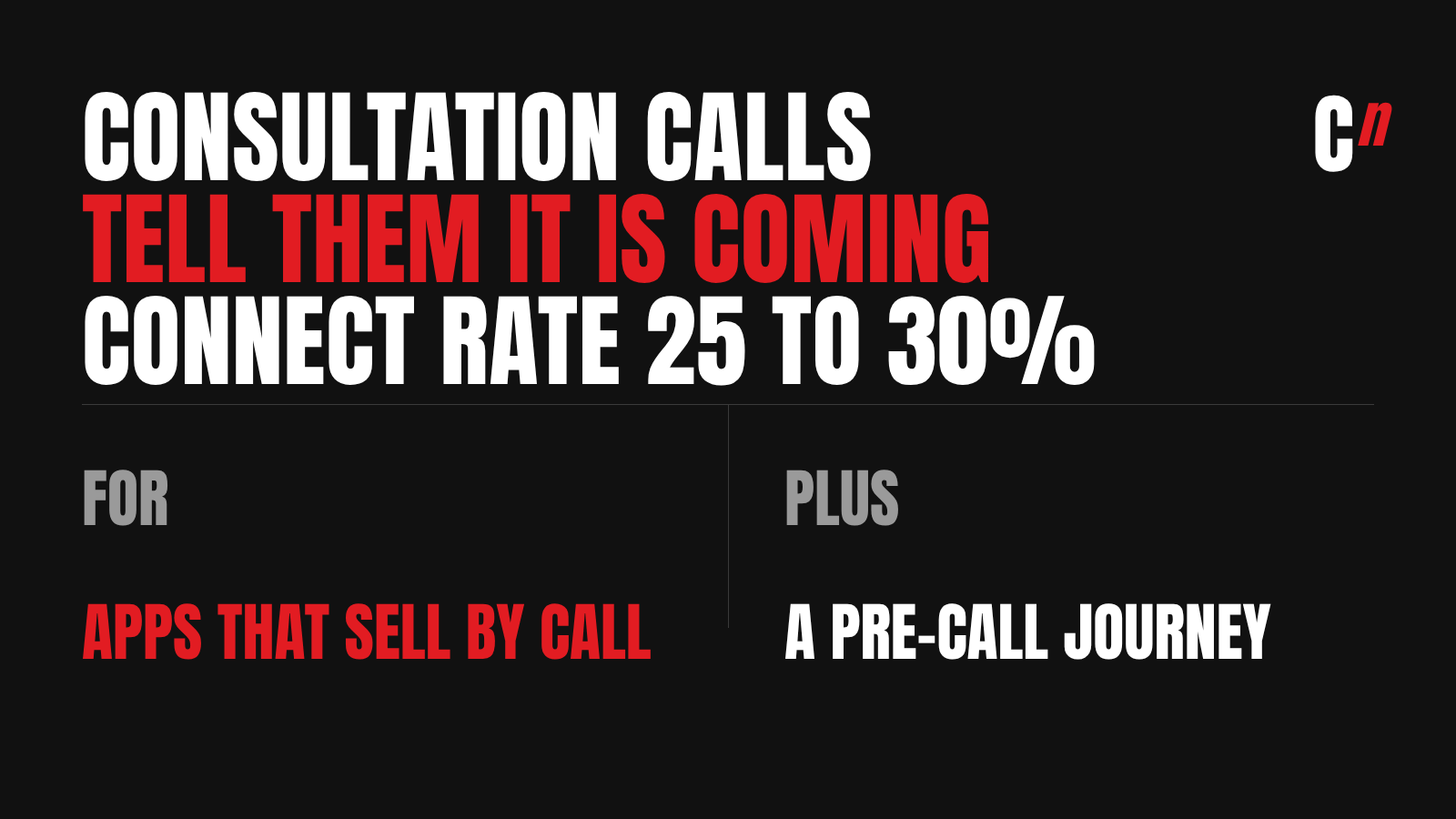
Most users who book a free consultation miss the call because they don't expect it. How to lift call connect rate from 25% towards 30% with an app journey.
Updated November 2026.
Most users who book a free consultation call don't pick up because they don't expect the call. They book, get sent into the app, and a few hours later an unknown number rings. At a health app where I led growth, the call connect rate sat at about 25%, and the goal was 30%. Every fix we planned had one job: make sure the user knew a call was coming, who would make it, and what they'd get from it.
I'm Raviraj Ramavarapu, founder of Compound Lab, a retention agency for D2C brands and consumer apps. At that health app, new users could book a call with a coach during onboarding. Every call that didn't connect was a lost chance to sell a plan. This is what we found when we walked the journey, and how I'd fix it for any app or brand that sells over the phone.
What is a good call connect rate?
For calls a user has booked themselves, the health app's baseline was about 25%, and 30% was the target the team considered good. Connect rate is only the first of three numbers worth tracking.
| Measure | What it tells you |
|---|---|
| Call connect rate | Share of booked calls where the user actually picked up |
| Call duration | Whether the user stayed long enough to hear the offer |
| Conversion rate | Share of connected calls that ended in a paid plan |
All three move together. A user who expected the call picks up, stays longer, and is easier to sell to. A user who didn't expect it either ignores the number or cuts the call short.
Why don't users pick up a call they booked?
Because nothing between the booking and the call reminds them it's coming. When we mapped the health app's journey, four gaps stood out.
| Gap | What the user felt |
|---|---|
| Straight to tracking after booking | They didn't know what to expect from the call |
| No proof of results | They hadn't seen what the program had done for people like them |
| No introduction to the coach | A stranger was going to call, with no reason to trust them |
| A home screen that didn't mention the call | The booking faded the moment they started using the app |
The result was a user who was confused, neutral and unprepared. By the time the phone rang, the booking was a vague memory and the number was unknown.
What should happen between booking and the call?
Every message should repeat three things: a call is coming, here's who will make it, and here's what you'll get. This was the plan at the health app.
- Right after booking, show what happens on the call. Story cards inside the app, explaining the consultation step by step, with a clear next action such as completing dietary preferences.
- Show results from people like them. Transformations chosen by the user's own profile, for example high BMI or a medical condition, not a generic success story.
- Introduce the coach. A WhatsApp message from the coach, with their profile, before the call. The user now knows the name and the number.
- Remind them across channels. Push, SMS and WhatsApp starting 15 minutes after booking, each pointing back to the call.
- Use the home screen. Replace the default banner with a "people like you" page and a chat option, so high-intent users can talk before the call.

None of these sells anything. They all exist to make the call expected. The selling happens on the call, which is why it has to connect.
How fast should the coach call after booking?
As fast as you can. In a Harvard Business Review study of more than a million sales leads, firms that contacted a lead within an hour were nearly seven times as likely to have a meaningful conversation as firms that waited even an hour longer, and more than 60 times as likely as those that waited a day.
Reminders help when the call is scheduled for later. A Cochrane review of healthcare appointments found that text reminders raised attendance from about 68% to about 79%, and worked about as well as phone call reminders. A message costs far less than a call, so use messages to protect the call.
What changes when you call users in India?
Users here are trained to ignore unknown numbers, so the call has to be recognisable before it rings.
- Name the caller in advance. The WhatsApp from the coach does this. A user who has seen the coach's name and photo has a reason to answer.
- Caller names are becoming visible. India is rolling out CNAP, which shows the caller's registered name on incoming calls, with business lines identified. Make sure the name your users see is one they'll recognise from the app.
- A booking is a request, and the window is short. Under TRAI's rules, a written or digital inquiry from a customer allows follow-up messages and calls for seven days. Treat the booking as that inquiry, and make the call well inside the window.
- Sales follow-ups are promotional. Calls that sell after the window, or to users who didn't ask, are promotional, go out from 140-series numbers and respect DND preferences. I cover the rules in who wins renewals.
How do you measure whether the journey worked?
Read connect rate, call duration and conversion together, by segment, before and after the change.
| Measure | Split it by |
|---|---|
| Call connect rate | Time between booking and call, and which reminders the user saw |
| Call duration | Whether the coach sent a WhatsApp first |
| Conversion rate | User profile, since high-intent groups convert differently |
| Calls booked per 100 sign-ups | Whether the booking screen itself is working |
Keep a small holdout group on the old journey, so you know whether the connect rate moved because of the messages or because of a good week. The same logic of finding leads in the app and closing them with people is in how to convert free users to paid.
Where I fit
Compound Lab works with D2C brands and consumer apps that sell through calls as well as screens, from the booking flow and the messages before the call to the coach's lead list and the follow-up. If users book calls and don't pick up, book a 30-minute call and we'll map what happens between their booking and your call.
Free audit
Answer the question they didn’t ask.
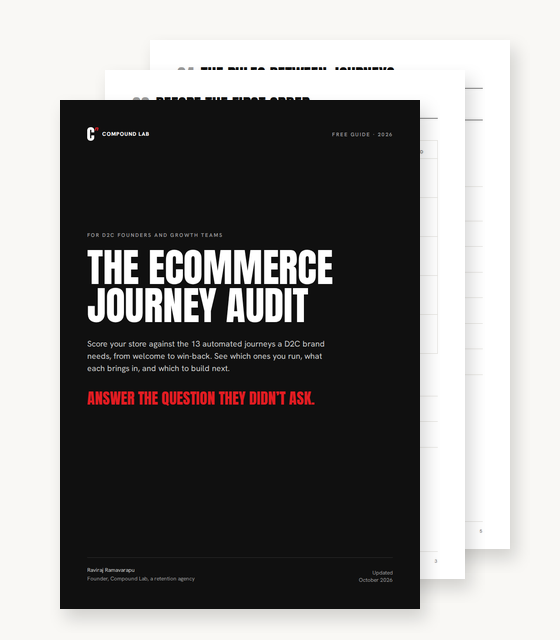
The ecommerce journey audit. Score your store against the 13 journeys a D2C brand needs, and pick which to build next, in one PDF.
- A scorecard for all 13 journeys, from welcome to price drop
- The rules that stop journeys from clashing, as a checklist
- Channel costs at Meta’s India rates, and a build-next planner
Sent. Check your inbox.
The audit is on its way to .