
Welcome
- Trigger
- First visit
- What they get
- A pop-up worth answering or one-tap sign-in, then a welcome series that introduces the brand, not a code.
- Channels
- Pop-up, email, WhatsApp
MovesNamed visitors
Cart recovery program for D2C brands in India
Compound Lab builds and runs every track from the first visit to the first order, end to end: welcome, browse, product, cart and checkout recovery, and COD confirmation. Measured on delivered revenue, not open rates.
Run by Raviraj Ramavarapu, who works every account himself.
Abandoned cart recovery is the set of automated messages that bring shoppers back to a cart they left before paying. A cart recovery program goes wider: it names visitors on the first visit, follows up on what they browsed, viewed and carted, confirms COD orders, and runs every track from welcome to the first order.
Sound familiar?
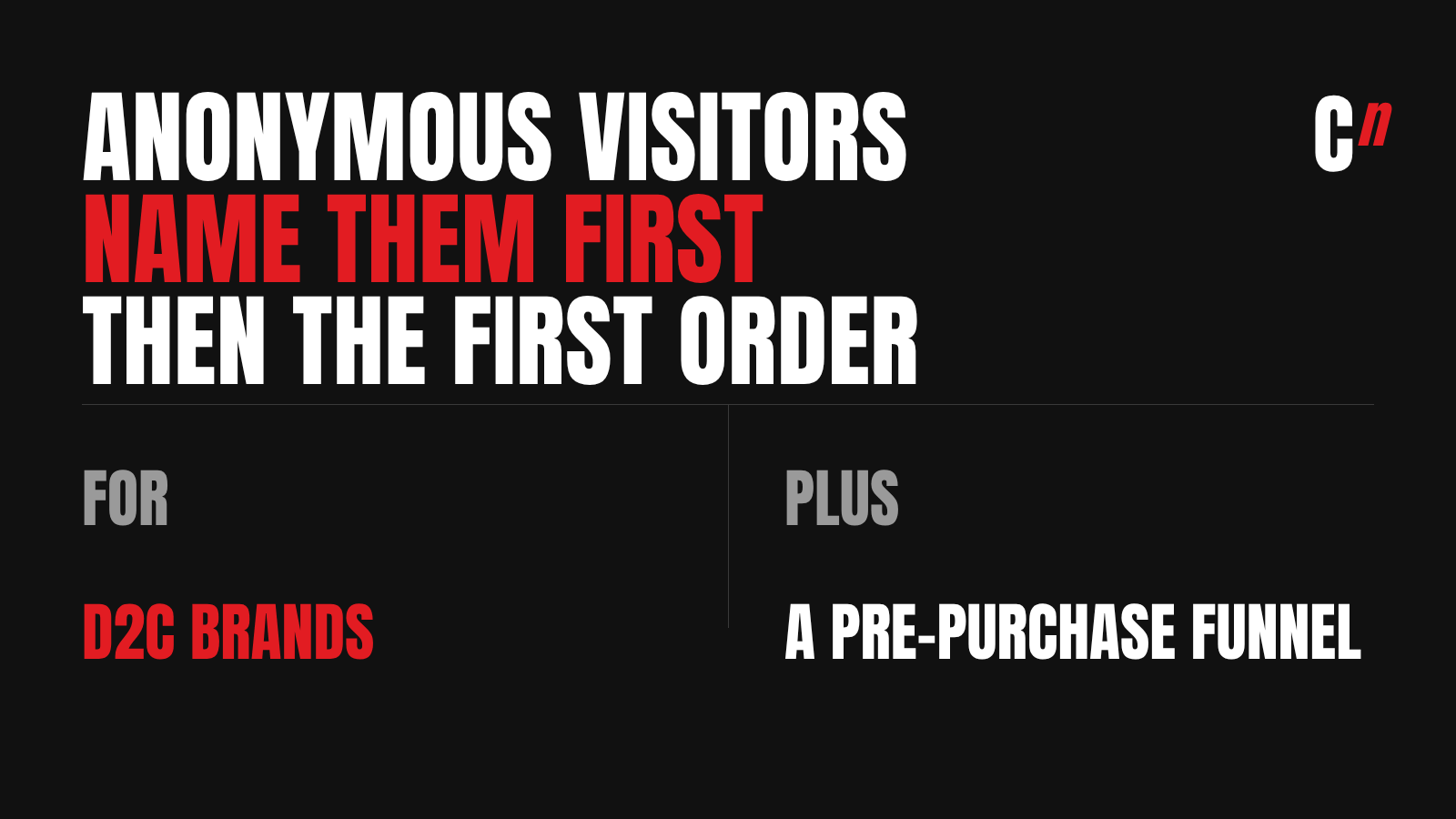
Most visitors leave without a name, so there is no one to bring back.
Recovery is one cart email, sent to the few who typed an email address.
COD orders get cancelled or come back, and returns to origin eat the margin.
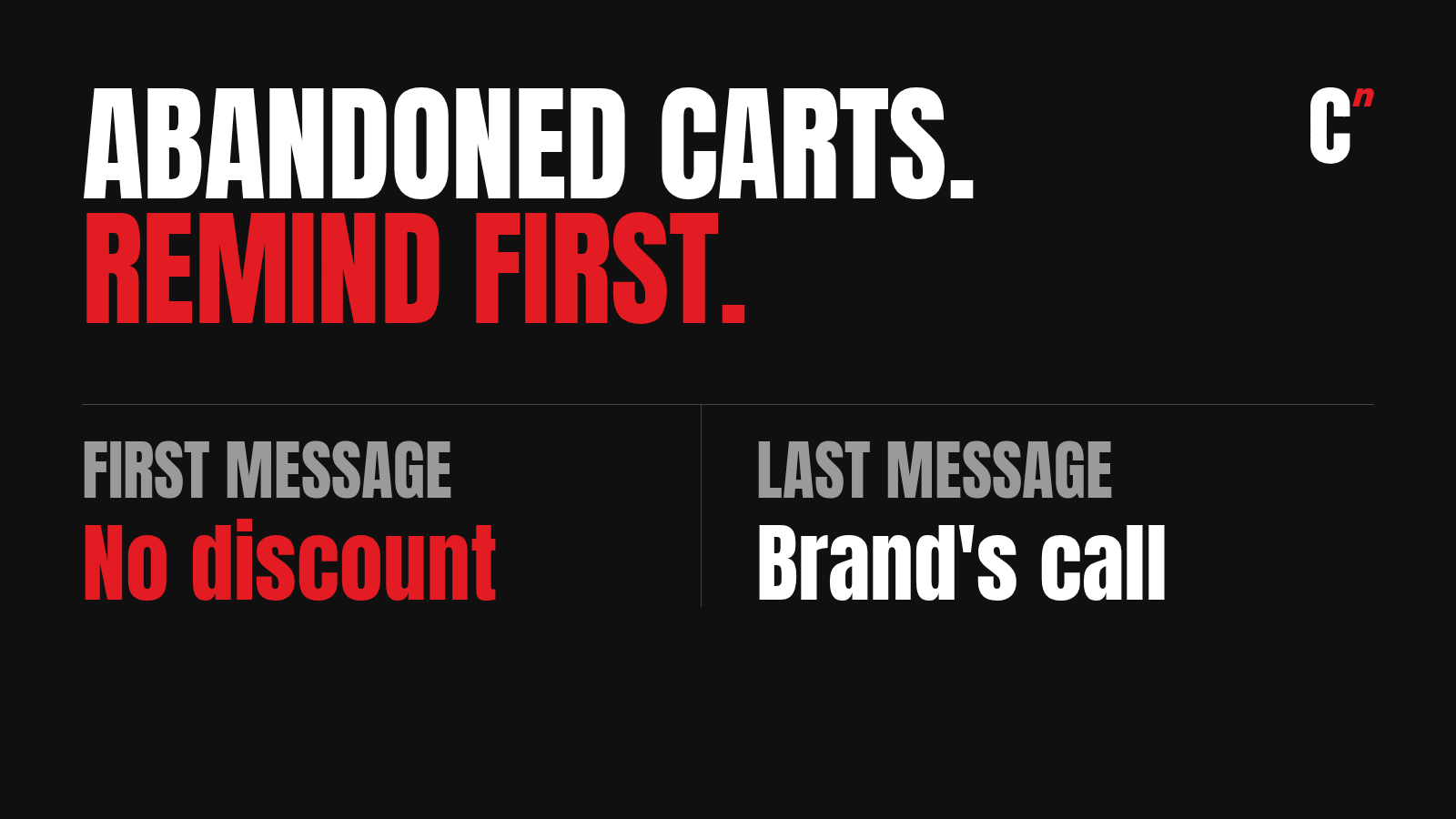
Every reminder carries a discount, so shoppers learn to wait for one.
That isn’t a traffic problem. It’s every exit with no journey behind it.
What changes
Today most stores run one cart email. A cart recovery program puts a journey behind every point where a shopper leaves, on the channel they will actually see.
How it works
Each track starts from something the shopper did, and each one has a single job.
MovesNamed visitors
MovesReturn visits
MovesProduct page conversion
MovesRecovered carts
MovesCheckout completion
MovesLower returns to origin
How we build it
The same process we run for every brand, pointed at the path from the first visit to the first order.
Map every exit in your funnel and how many carts carry a name you can reach.
Name more visitors with one-tap sign-in and a pop-up worth answering.
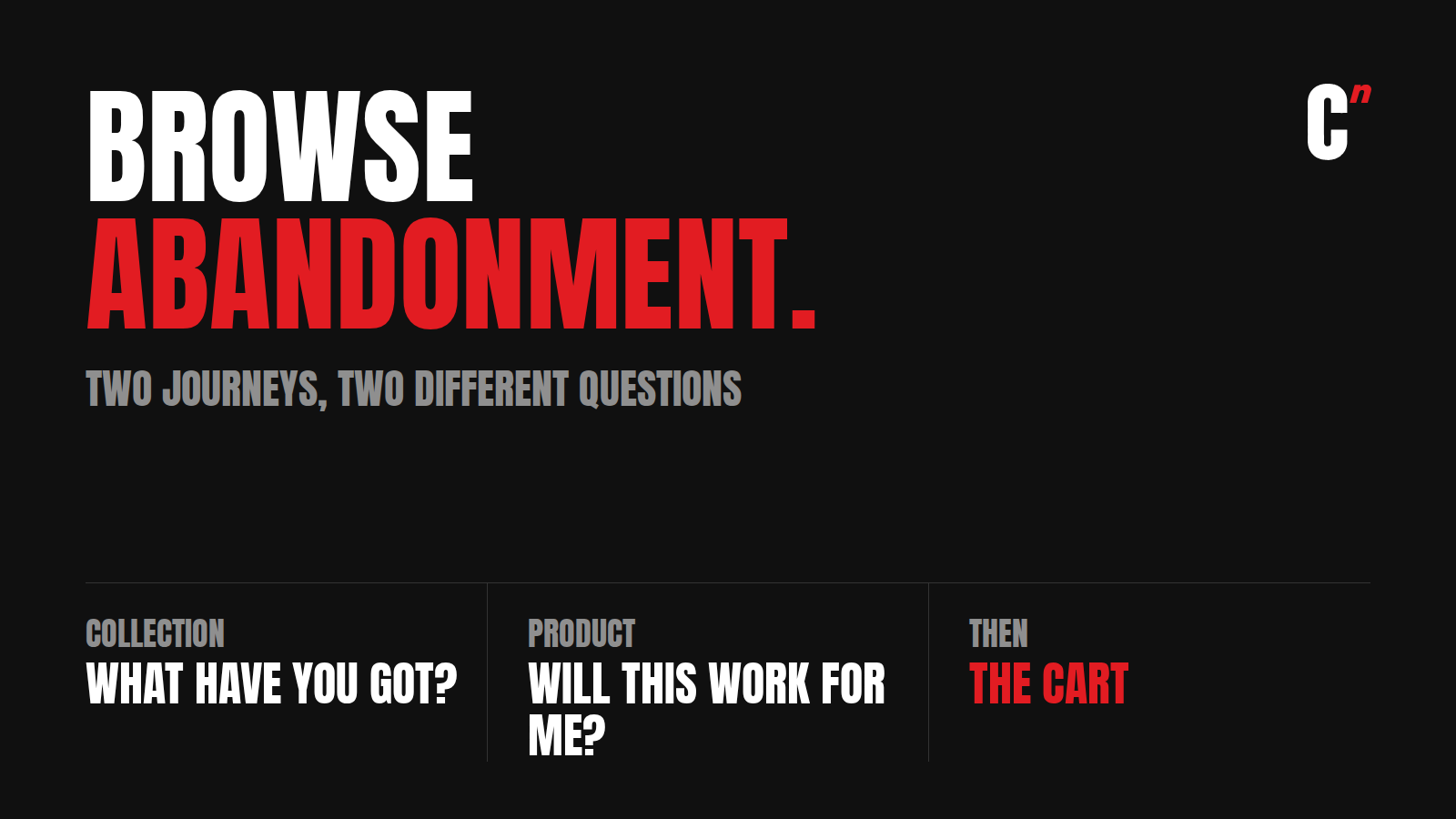
Group shoppers by what they did: browsed, viewed, carted, started checkout, paid COD.
Build the six tracks, each with one job and one trigger.
Every track runs on its own, on the channel each shopper actually reads.
Test timing, message and whether a code is needed at all. Keep what recovers revenue.
Every recovered first order feeds the repeat purchase program that follows.
A journey at every exit at PNG Jewellers, a WhatsApp channel that delivers at Cumin Co, and what CRM drove at Healthify Store.
All case studies D2C / 01
 D2C / 05
 D2C / 03
The first 90 days
One plan, run in the open. Every phase has one output, and you see all five numbers every month.
Audit and diagnoseWeeks 1 to 2
Repair and planWeek 3
Launch togetherWeeks 4 to 6
Run and readWeeks 7 to 10
Optimise and expandWeeks 11 to 13
The monthly report
The five numbers you see every month. Illustrative direction, not your data.

Why Compound Lab
Raviraj built these systems in-house at Healthify Store and Cumin Co, and works every account himself. No handoff to a junior team after the pitch.
Strategy, copy, setup and testing come from one team, so nothing dies between the deck and your CRM.
Repeat rate and revenue per buyer, read every week, on the platform you already use.
Platforms
Platform-agnostic. We fit your stack, not the other way round. These are the ones we’ve run with revenue on the line.
 CleverTap
 MoEngage
 WebEngage
 Kwik Engage
 LimeChat
 Zoko
 Shopify
 Nitro
 Exotel
Questions
With one-tap sign-in tools, pop-ups worth answering, and stitching web, app and WhatsApp into one profile. Our guide to anonymous visitors goes deeper.
It depends on price, category and how many carts you can actually reach. We start by raising the share of carts with a name attached, because a cart you can’t message can’t be recovered.
A WhatsApp confirmation that offers the switch to pay online, and a reason at checkout to pay now. Fewer fake orders and returns to origin follow.
Not the first one. Lead with the cart, help and easy returns. A code, if any, comes late, only to the shoppers who need it, and only when the margin on that product can carry it.
Shopify, GoKwik, KwikPass, ShopPass and Nitro on the store side, and the CRM or WhatsApp tool you already use.
Right after the order, one WhatsApp message with three buttons: confirm, change address or cancel, plus an offer to pay online instead. One reminder if there is no reply, a pincode check before dispatch, and a manual review only for orders that look risky. We measure delivered orders, not confirmed ones.
Most carts are abandoned. Baymard Institute’s average across published studies is about 70%, so the lever is not the rate itself but how many of those carts carry a name you can reach, and what you send them.
For most Indian D2C brands, WhatsApp is read faster and more often, so it leads the cart and COD tracks. Email carries the longer story and the browse track, and SMS is the fallback when WhatsApp fails.
After the audit, scoped to your stack and the tracks you want us to run. We share it on the call once we know what needs building.
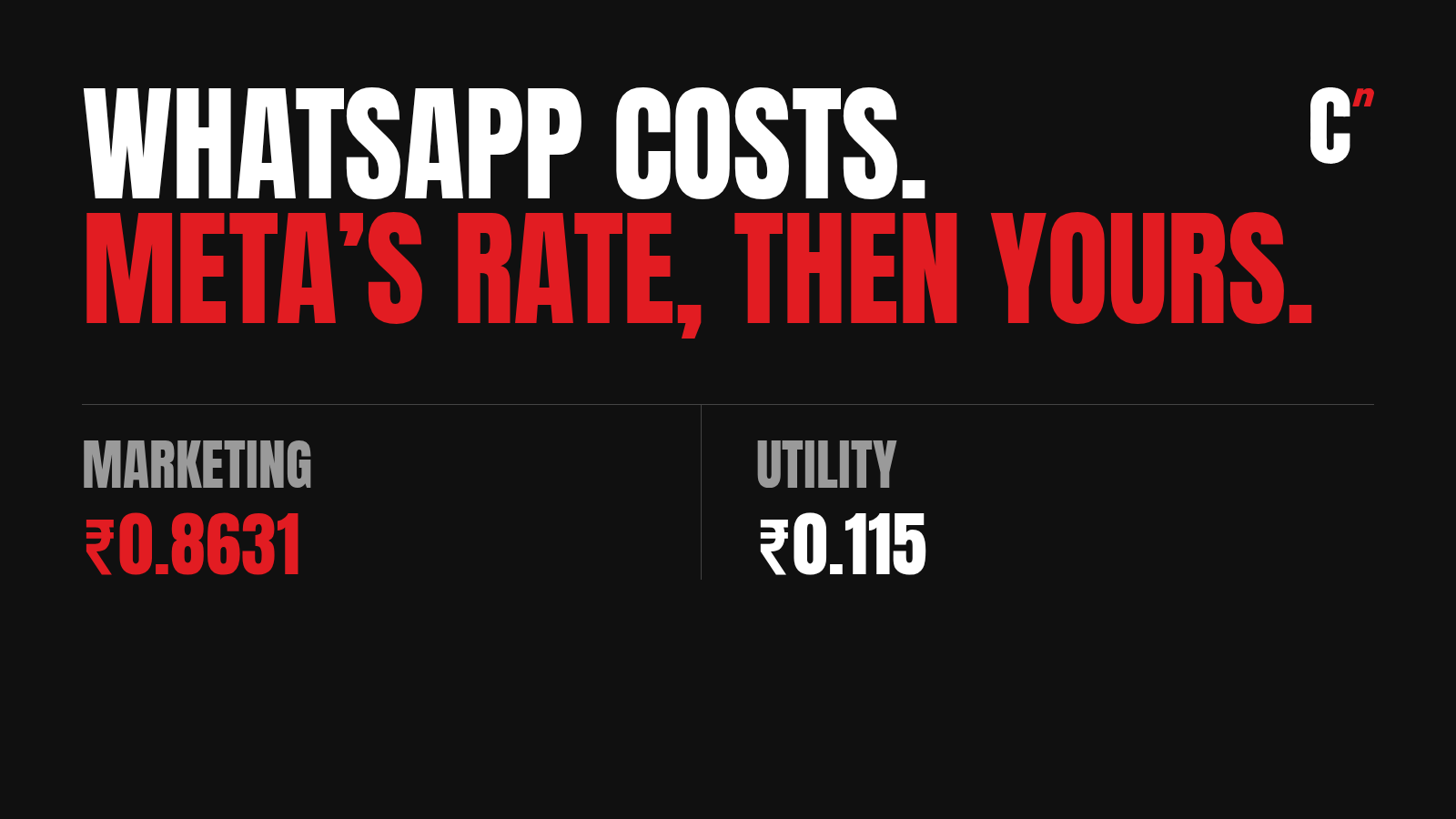
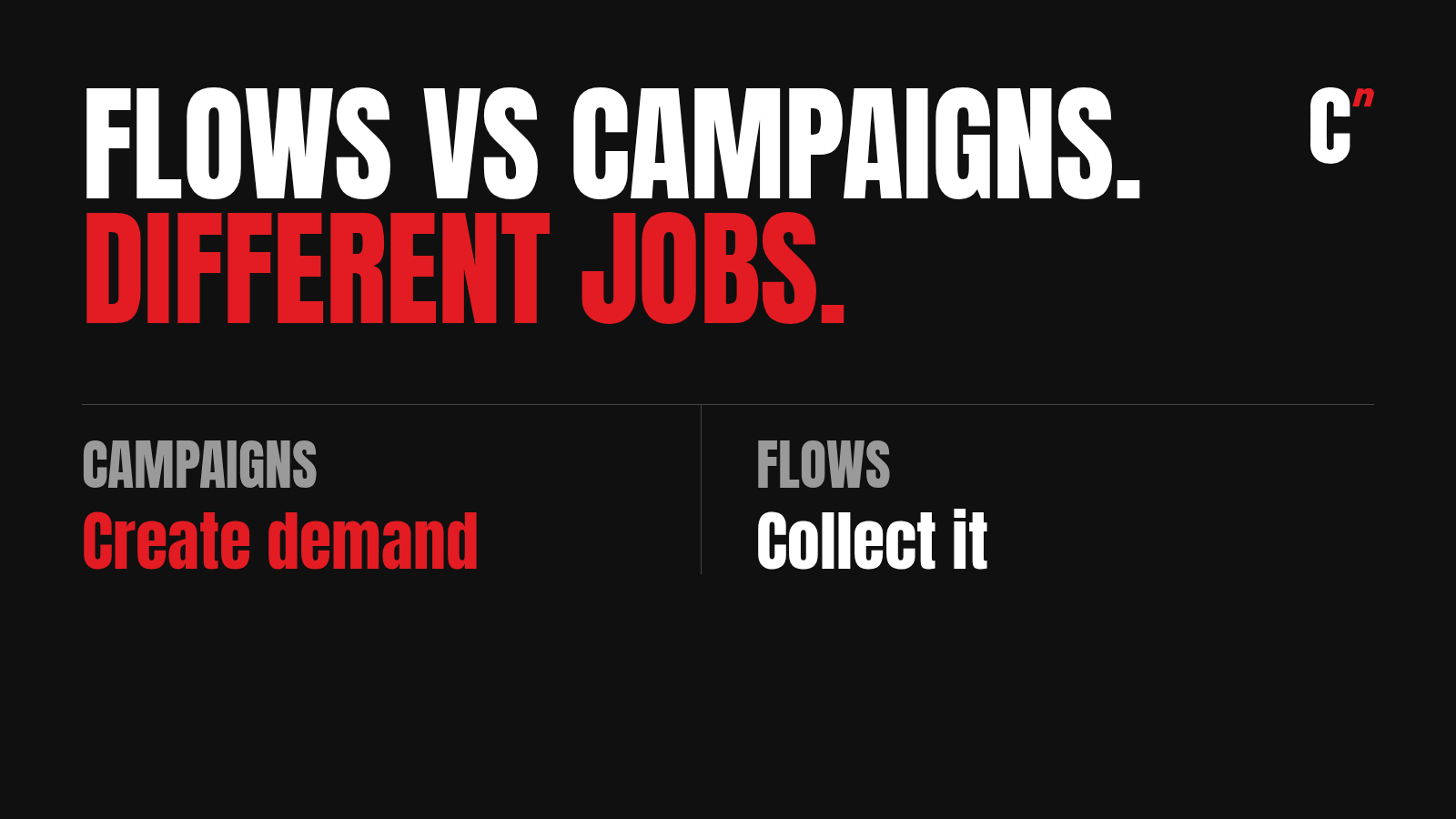
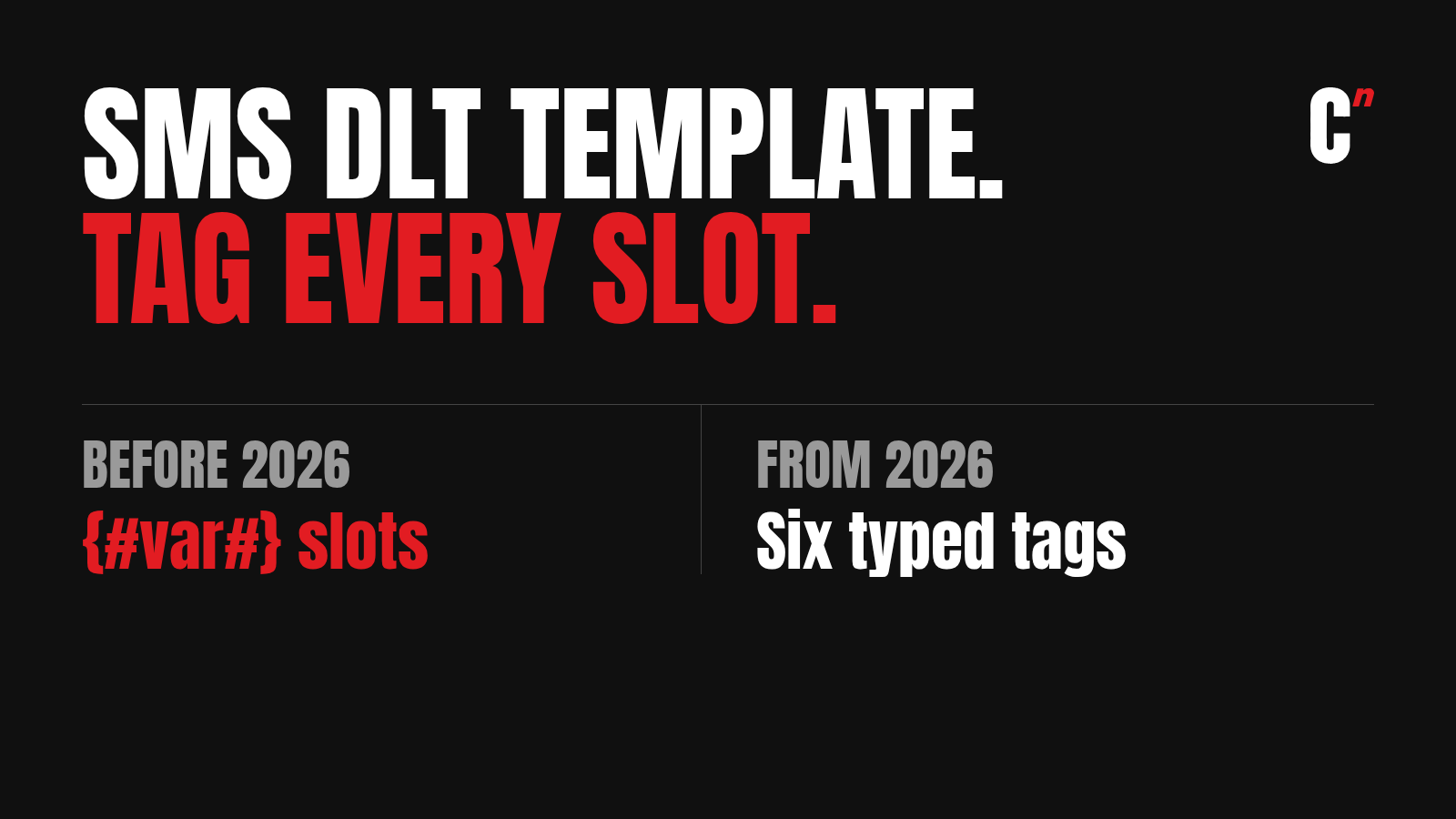
Flows, costs and the rules behind every message before the first order.
Need more than one stage? We run the whole lifecycle as one engagement.
See the full lifecycleBook a call
Thirty minutes with Raviraj, not a sales team. On the call we look at three things: