
 D2C / 01
77%CRM revenue from automations
Retention audit and CRM audit for D2C brands and apps in India
A Compound Lab retention audit reads your CRM, store, checkout, WhatsApp and app the way a customer meets them. We shop your brand, follow every event and every message, and show you what is in use, what is switched off and what is broken. Then we give you the plan, one problem at a time.
Run by Raviraj Ramavarapu, who reads every account himself.
A retention audit is a read-only review of what happens to a customer between their first visit and their second order: which actions your tools record, which messages they try to send, what actually arrives, and who speaks after the first order. It is measured against your own targets for repeat rate, channel revenue and discounts, and it ends with a numbered list of problems and the plan to fix each one.
Where you stand
Orders, buyers and the repeat curve, cohort by cohort.
Everyone who came back, and how long they took.
Everyone who bought once, more than 30 days ago.
The targets you set, and the gap to each one.
Illustrative. A hundred buyers, sorted the way the audit sorts them.
They trusted you once. Nobody asked them twice.
Act one: the shop
A real cart on our own phone, timed to the second.
Every event your tools record about us, in the order they fire.
Every message they try to send, and what actually reaches the phone.
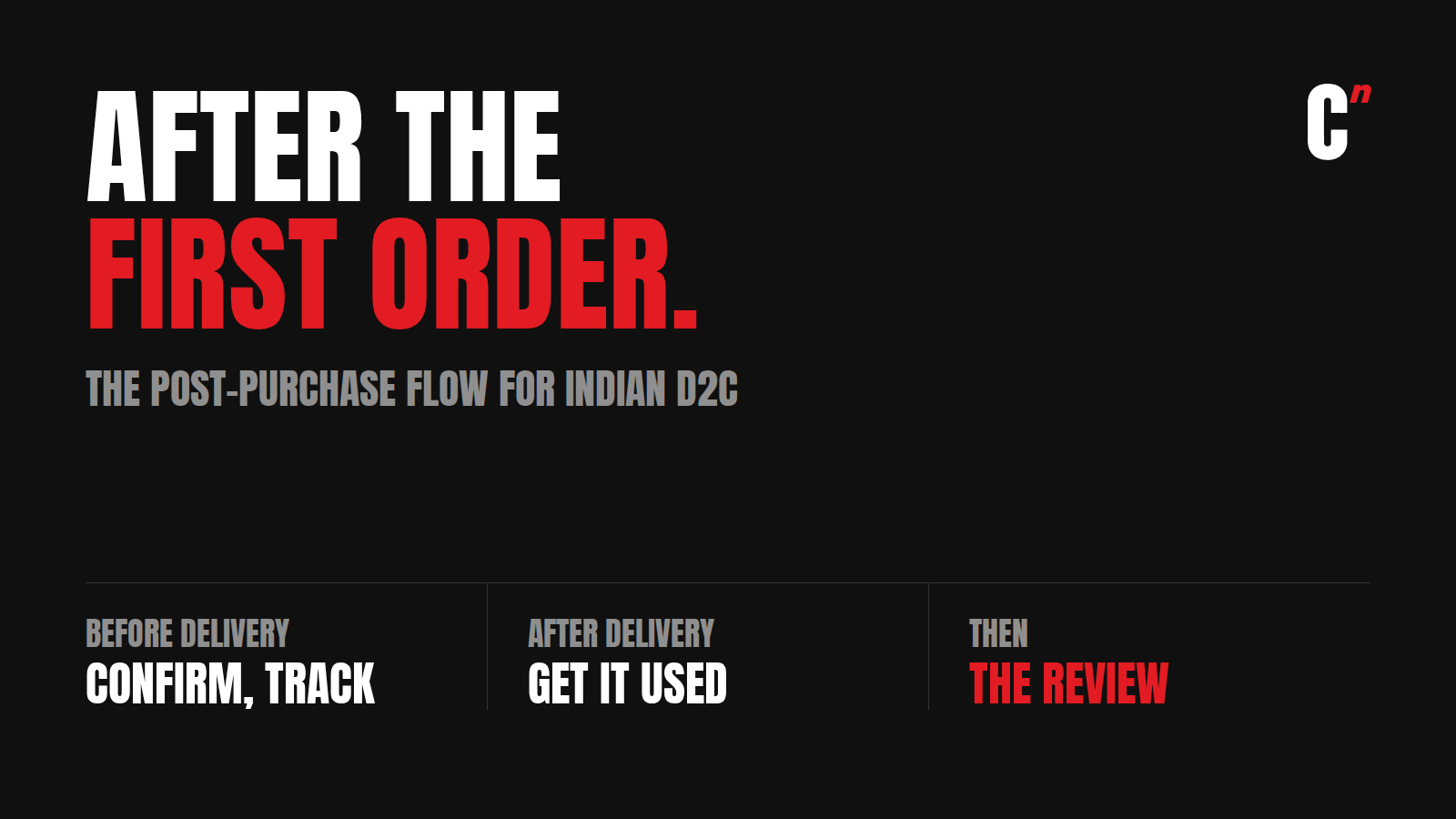
What happens the next day, on the app, and in the week after.
Illustrative. Built the way every audit starts.
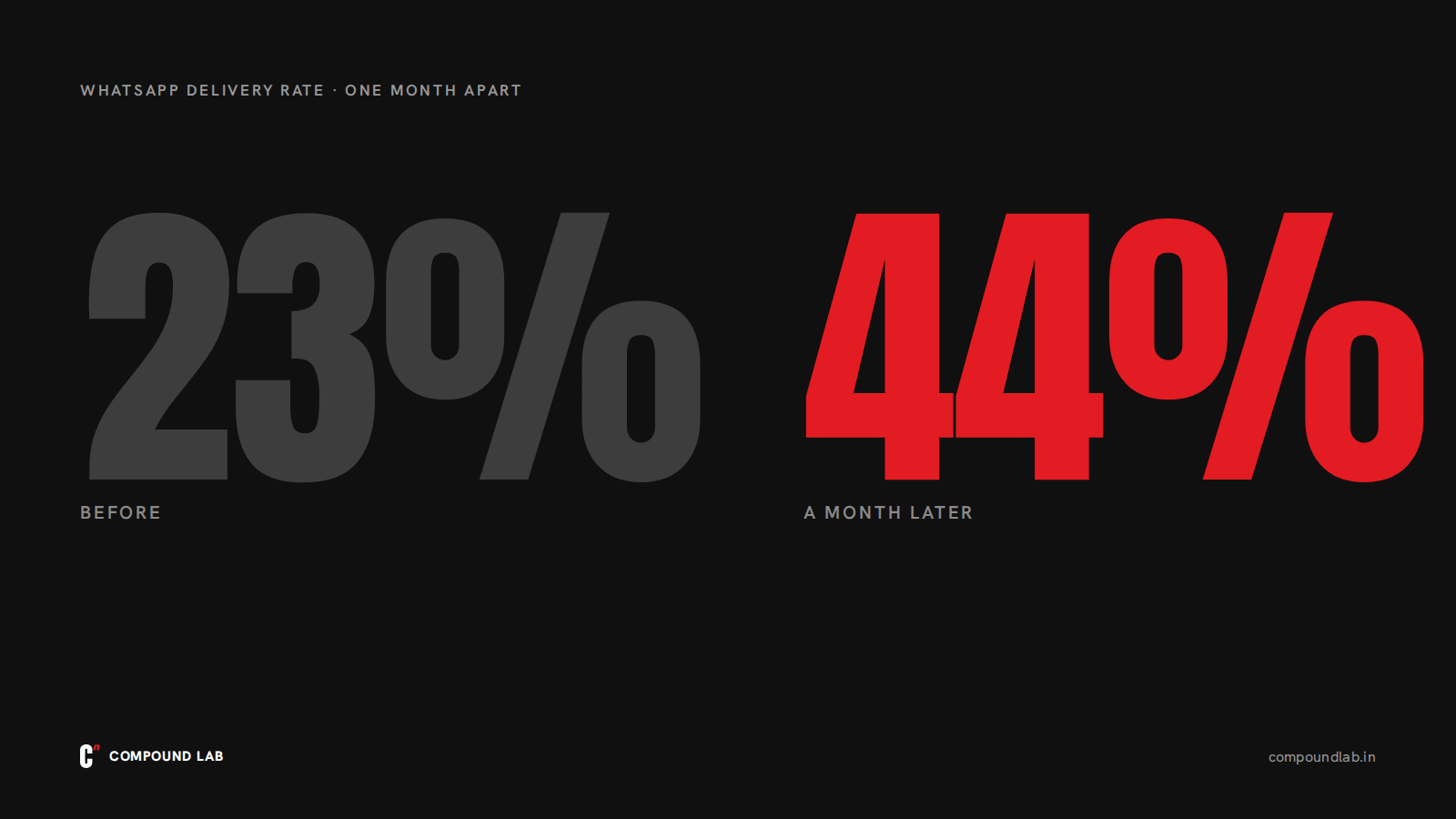
Every tool said sent. The phone said otherwise.
Act two: why it happened
How your tools pass data to each other, and the links that exist but are switched off.
One customer action arriving under several event names, and the one each flow listens to.
Flows racing for the same customer, and the generic message that wins.
Who can be reached at all, and who is messaged anyway.
Two tools claiming the same order, with no control group to settle it.
Illustrative. Bars drawn to scale, as they appear in a real event list.
Your customer did everything right. Your tools just didn’t hear it.
Act three: after the order
Every message from the order to day 90, from every tool that sends.
Who owns each moment, and the moments nobody owns.
What support is answering that a message could have.
Features already paid for, and still switched off.
Illustrative. Filled squares are tools that send something at that moment.
The second order is nobody’s job.
What you get
A story deck that shows where you stand today, a tool-by-tool stack audit, and the plan that answers every problem in order. Both decks are walked through with your team on a call, with the source documents behind every number.
Retention strategies, checked
Is it built, or does it live on a slide?
Does it start on the right event, for the right people?
Does the message reach the phone or the inbox?
Does it earn, measured against a control group?
Illustrative. For apps the list is onboarding, activation, trial to paid, renewals and win-back.
A strategy on a slide isn’t a strategy.
Every tool, sorted
Each tool in your stack is read against your targets and every setting, flow and feature lands in one of three states.
Set up and doing real work.
In the account, switched off.
Running, but failing.
A platform limit, like Meta’s cap on marketing messages per person, is shown as a limit. It is never counted as a problem.
How we audit
We read your tools with view access or exports. Nothing is edited, paused or switched on while we audit.
Your repeat rate, your channel goals and your rules on discounts. Every finding is measured against what you said you want.
If your tools can do it and are not set up to, it is a problem. If a platform caps it, it is a limit, and we say so.
Each figure names the tool, the screen and the day it was read. What we could not confirm is listed as an open question, never guessed.
The plan starts with switched-off features and broken settings, before it suggests any new software.
How the audit runs
The same order for every brand and app. How long it takes depends on your stack, and we tell you on the first call.
Your targets in your words: repeat rate, revenue from each channel, and what you will not discount.
View logins or exports for your CRM, store, checkout, messaging tools and app. Either works.
We visit, add to cart and leave like a customer, and log everything that follows.
Every tool, flow, event and setting, read on one day so the numbers line up.
Problems numbered and tied to evidence, with limits listed apart.
Fixes in order, one problem at a time, with what each one should move.
Both decks on a call with your team, and the documents to keep.
What happened after the audit: the missing checkout event at PNG Jewellers, and the retention work at Healthify and Mygate.
All case studiesD2C / 01 CONSUMER APP / 04D2C / 03
 CONSUMER APP / 06

Why Compound Lab
Raviraj has run CleverTap, MoEngage, WebEngage and Kwik Engage with revenue on the line, so settings are read the way an operator reads them.
The audit starts with a real visit on a real phone, not a dashboard. You see what your customer saw.
Every problem comes with its fix, in the order it should happen, inside the tools you already pay for.
Questions
Where you stand against your targets, a real visit followed event by event and message by message, how your tools are wired, what happens after the first order, delivery by channel, how revenue is counted, a scorecard for every tool, a numbered problem register and the plan to fix it.
A CRM audit checks one tool: its events, flows, channels and settings. A retention audit follows the customer across every tool they meet, from the store and checkout to WhatsApp, the app and support, and reads the repeat curve. Ours includes a full CRM audit as one part of it.
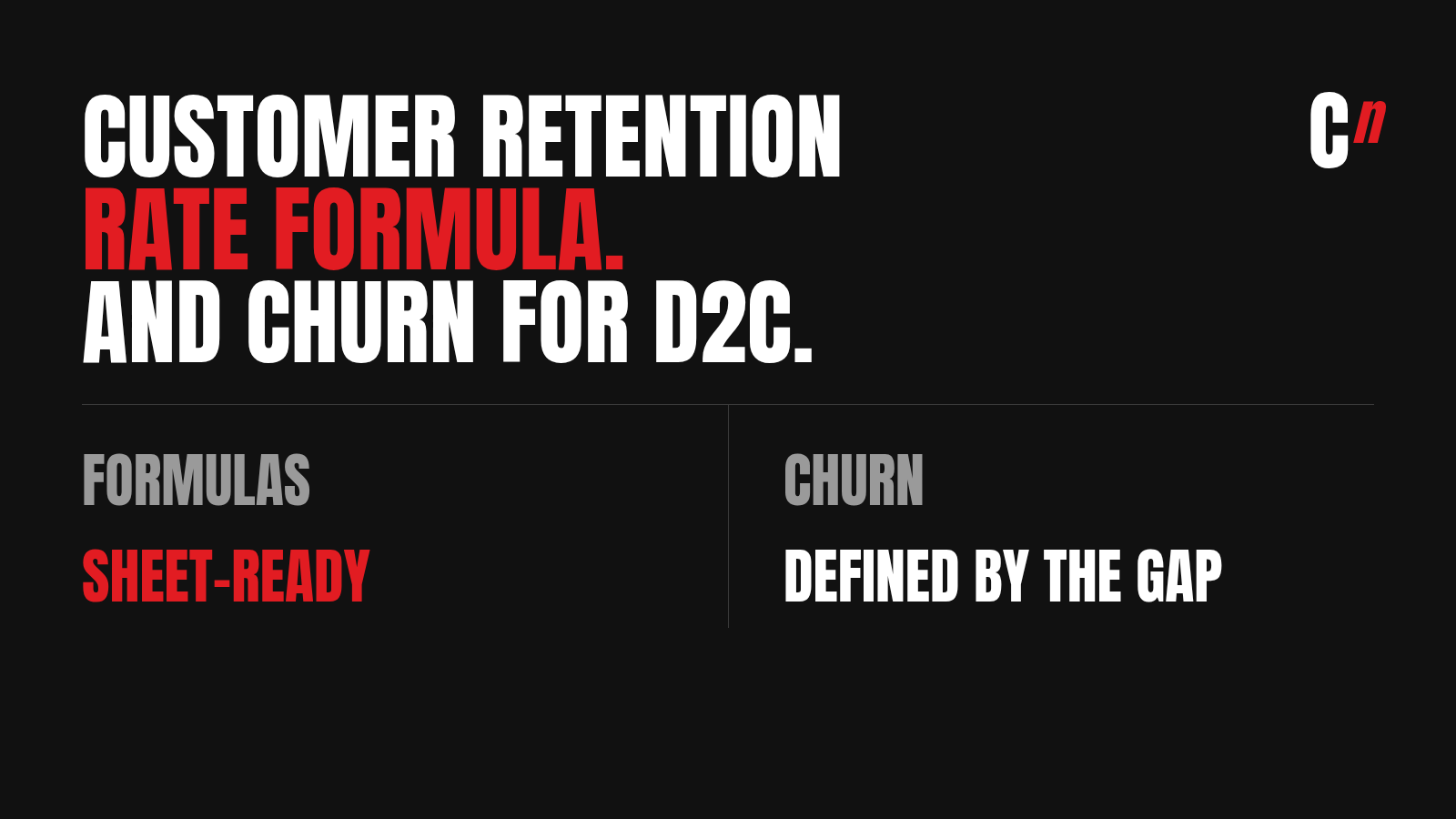
Customer retention analysis gives you the numbers: cohorts, repeat rate and the gap between orders. The audit adds the why behind them, by reading the tools, events and messages that produce those numbers. See cohort analysis for the numbers side.
View-only logins work best, and exports and screenshots work too. Either way the audit is read-only. Nothing in your accounts is edited, paused or switched on.
Customer engagement platforms such as MoEngage, CleverTap, WebEngage and Kwik Engage, your Shopify store or app, your checkout, your WhatsApp provider, chat and helpdesk tools, and visitor identification tools. If your stack is different, we start by reading what it can do. A martech stack audit is the same method applied to every tool you pay for.
Every customer retention strategy a brand should run: welcome, cart and checkout recovery, post-purchase, replenishment, cross-sell, win-back, and loyalty and referral. For apps: onboarding, activation, trial to paid, renewals and win-back. Each one is checked for whether it is built, starts on the right event, reaches people and earns against a control group.
It depends on how many tools you run and how quickly access comes through. We share the timeline on the first call, once we know your stack.
Yes. Every numbered problem gets its fix, in order, starting with what your tools can already do. You can run the plan with your own team or with us.
Two decks, one showing where you stand today and one going tool by tool, plus the event list and the source notes behind every number. We walk your team through both on a call.
Yes. For apps the shop becomes an install, an onboarding and a trial, and the audit reads app events, push opt-in, paywalls and renewals the same way.
After the first call, scoped to the tools you run and the questions you want answered. There is no fixed price list.
Yes. Compound Lab is based in Bengaluru and audits brands and apps across India. The work happens on calls and inside your tools.
Cohorts, repeat rates, control groups and delivery, written down.
Book a call
Thirty minutes with Raviraj, not a sales team. On the call we look at three things: