
Performance Agency, Retention Agency or In-House Hire?
Performance agency, retention agency, senior hire or junior: what each really costs a D2C brand in India, and how to tell which one you need.
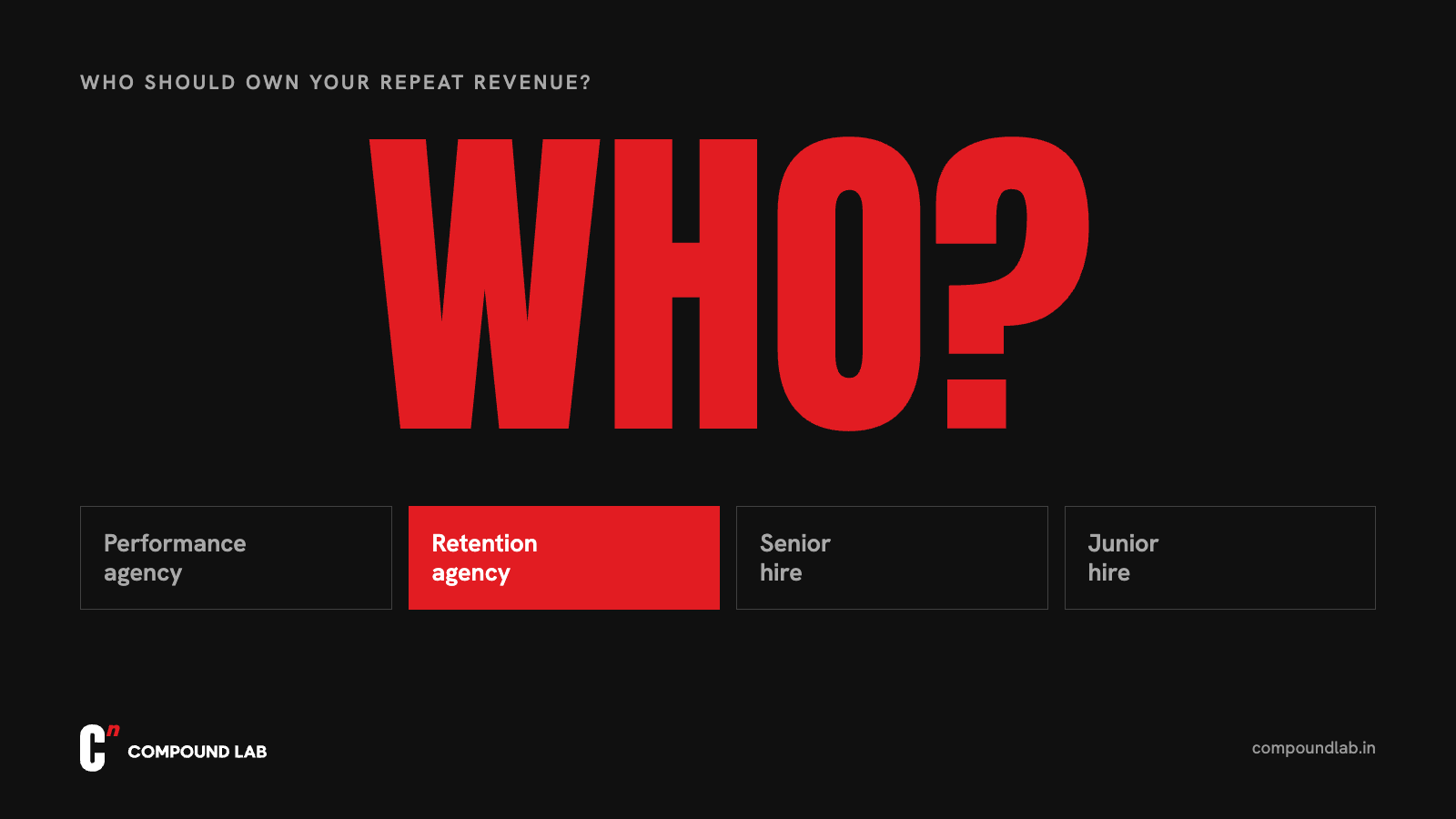
In my experience, most D2C brands in India with fewer than 2 to 3 lakh customers don't need a full-time senior retention head. They need a dedicated retention team, a specialist or a retention agency, that sets the strategy and gets it executed, working with the team they already have. Hire the senior head too early and you pay senior rates for work your brand doesn't need yet. Leave retention with your performance agency and you pay nothing on the invoice, and lose the repeat revenue your flows never earn.
I've sat in every seat in this decision. I've been the in-house head of retention, the outside CRM partner, and the expensive hire who shouldn't have been hired. This is what I'd tell a founder before they choose. The customer thresholds and cost ranges below are my working estimates from experience, not an India-wide salary or agency-pricing survey.
I was the expensive hire
A premium D2C brand hired me to lead retention on a senior package. Its average order value was high, around ₹6,000, but its customer base was under 30,000.
At that size, the job didn't need a senior head. It needed a clear plan and someone to execute it. So the role drifted. I spent my time guiding one junior and picking up work outside retention entirely. Then I left.
One hiring decision cost that brand five things:
- A senior salary for work a smaller brand didn't yet need.
- A retention role that drifted into other jobs.
- The loss of the person it hired.
- Nobody left to run retention.
- A second round of hiring, for a role that is still hard to fill.
The brand was right to invest in retention. It hired for a stage it hadn't reached yet.
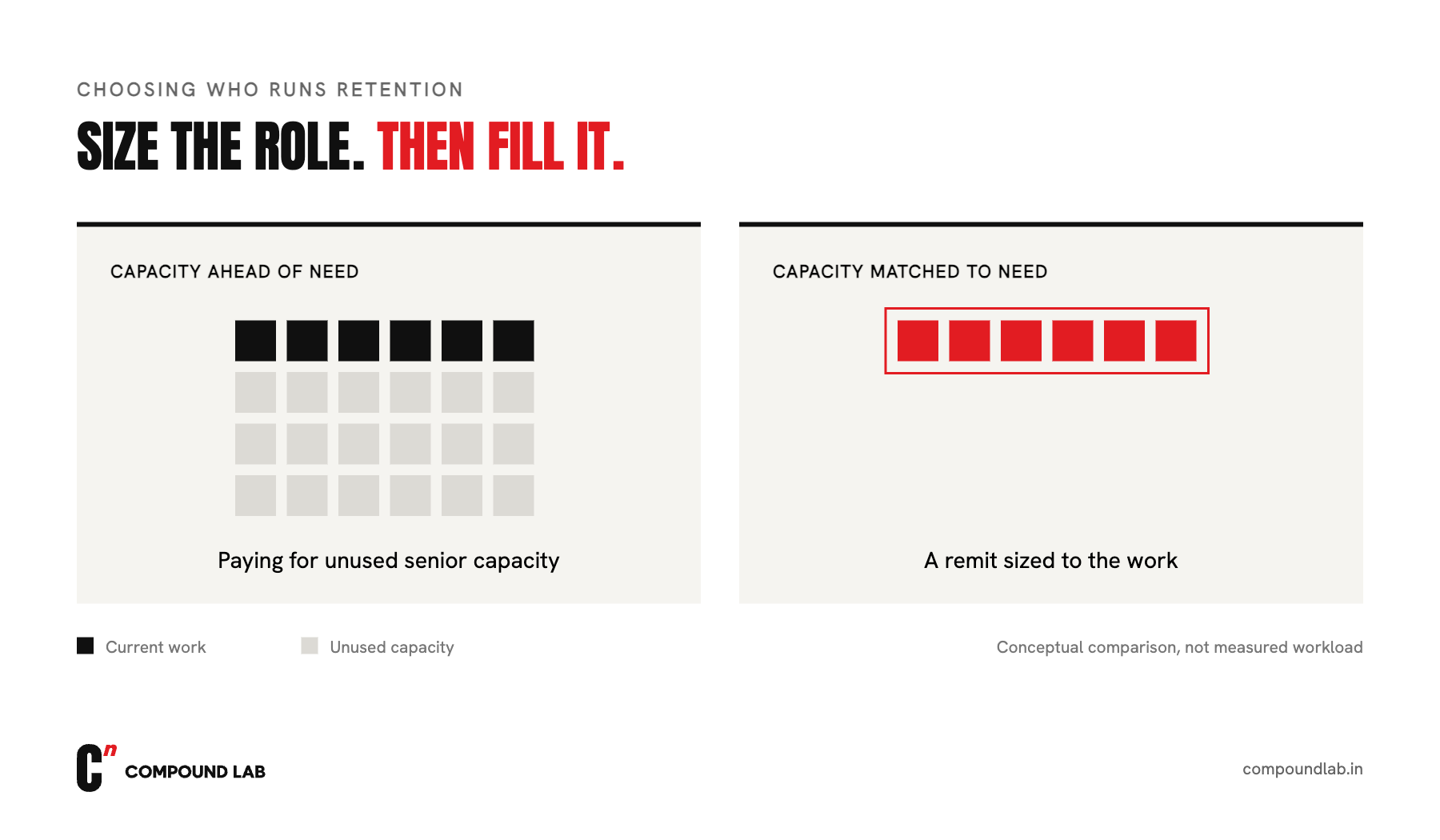
The test: when does a senior hire pay for itself?
Here is the rule I use. Hire a full-time senior retention head when a one-percentage-point move in repeat rate or conversion is worth more in a year than that person costs. Below that line, a dedicated retention partner is usually the better buy.
Treat this as a first-pass hiring test. For the business case, compare the extra contribution after discounts and variable costs with the fully loaded annual cost of the hire. Extra revenue alone does not pay the salary, and customer count alone does not decide the role.
At a large consumer app, one percentage point can be worth lakhs a month. You can see what that complexity looks like in the in-app funnel work at Healthify: free users, paying users, renewals and lapsed subscribers, each needing a different route, across 11 surfaces in the app.
You probably need a senior head if most of these are true:
- You manage several lifecycle stages, such as free to paid to renewal to reactivation.
- You cross-sell several things, including third-party services, the way MyGate sells airport cabs and home services inside one app.
- You run three or more channels at once, like WhatsApp, email, SMS and push, on a platform that needs someone who knows it deeply.
- For D2C, you have 2 to 3 lakh customers or more, with 30 to 40% of them buying again, several SKUs to cross-sell, a loyalty programme, and enough traffic that identifying anonymous visitors is worth doing.
If you ticked one or none, keep reading.
The four options, and what each one really gives you
1. Your performance agency adds retention. This is a pattern I've seen in India: retention gets added to an acquisition-led agency's scope. The founder asks the agency to "also do WhatsApp," and whoever on the team knows the tool runs a bulk send. Retention becomes a favour the agency does on the side.
2. You hire a junior in-house. A junior can run the tool and execute the work. The gap is who sets the priorities, designs the journeys and owns the revenue outcome. If that direction is missing, hiring someone to send more campaigns does not solve it.
3. You hire a full-time senior head. Capable, and the right call above the threshold. Below it, you're paying senior rates for a basic drill, and you face an expensive gap if they leave.
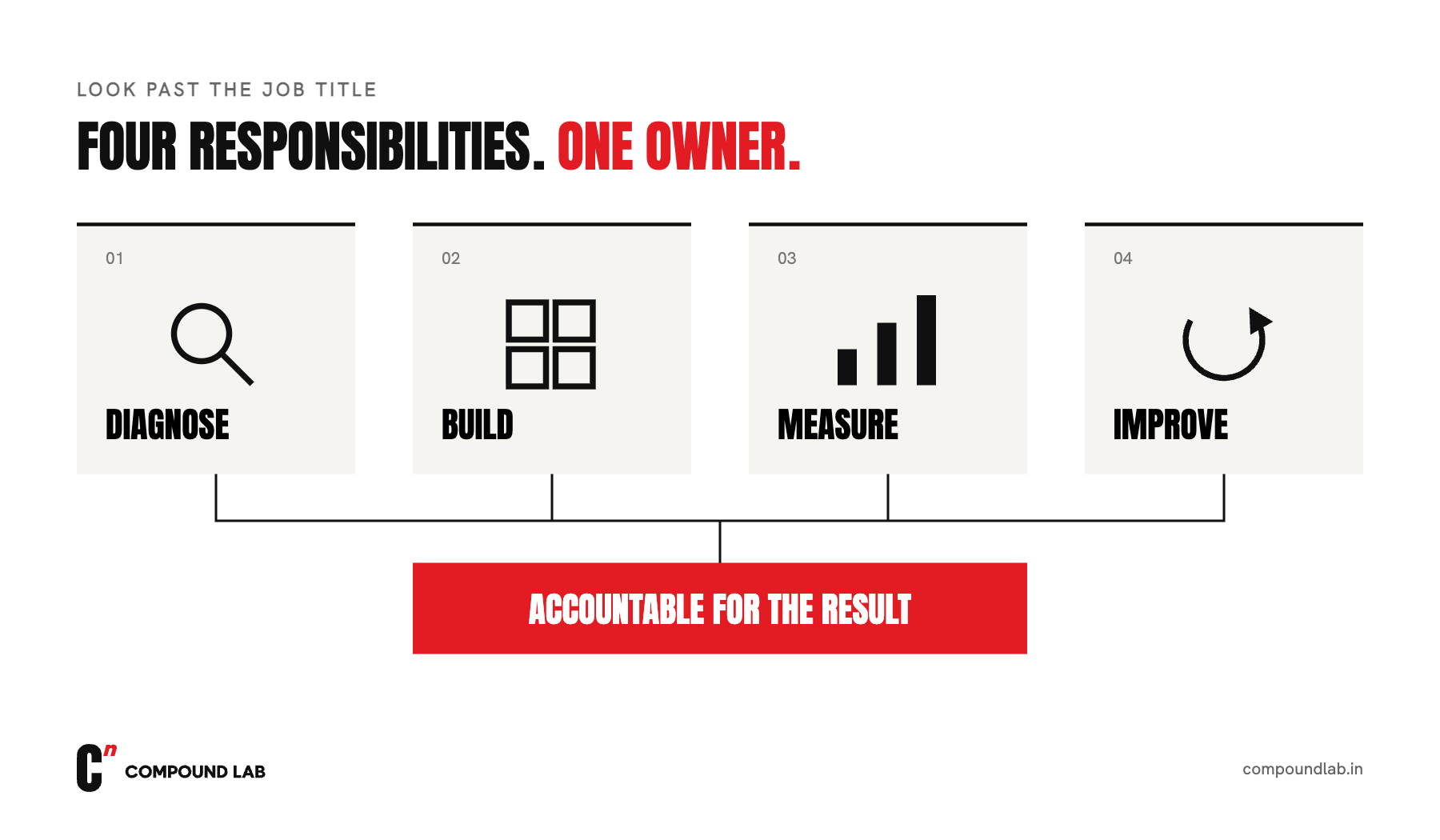
4. You bring in a dedicated retention partner. This can be a single specialist or a retention agency, as long as retention is the only thing they do. They bring the tooling depth, the segmentation logic, an understanding of your product, and the right cadence across the whole journey. The D2C retention journey starts at the pop-up and runs through browse, product, cart and checkout, then the first order, the first refill, the first cross-sell and upsell, loyalty and referral. They decide what to build and why, and either get it executed through your team or execute it for you.
Is CRM platform onboarding another option?
Many brands stop here. The tool connects your Shopify or checkout events and switches on template flows. If nobody adapts those templates, a playful brand and a serious one can end up sounding the same. Shopify's documentation shows that workflow templates can be customised. The template is a starting point; somebody still has to own the logic, copy and improvement after launch.
What about freelancers?
It depends on where they've worked, and the difference is bigger than most founders expect.
Brand-side people may know what to achieve without knowing the tool deeply. They've owned a revenue number. They may not know which setting in the tool gets them there.
Vendor-side people may know how without owning the commercial goal. They know the tool inside out. The interview needs to establish whether they can connect that knowledge to a revenue problem.
Employees freelancing on the side know current workflows, but your account gets their evenings. The risk to check is accountability. These are interview prompts, not rules about everyone with that background.
One question to ask each in an interview:
| Freelancer type | Ask them |
|---|---|
| Brand-side | "Walk me through building this flow in our tool, step by step." |
| Vendor-side | "Which number would this flow move, and how would you know it worked?" |
| Side project | "What are you accountable for each month, and what happens when your day job runs late?" |
What retention support costs in India
These are indicative monthly ranges from my experience. Scope, seniority and execution responsibility change the quote. They are not a rate card for Compound Lab.
| Option | Monthly cost | What it actually costs you |
|---|---|---|
| Performance agency adding retention | ₹0 to 10,000 | Free on the invoice. Paid for in the repeat revenue your flows never earn. |
| Full-time senior head | ₹2 to 3 lakh | Senior rates for work a brand your size doesn't need yet, and a costly gap when they leave. |
| Junior in-house alone | ₹40,000 to 80,000 | Someone who can run the tool, with nobody telling them what it should achieve. |
| Retention specialist or agency | From ₹1 to 1.5 lakh | Dedicated strategy and execution, often below the cost of a senior hire. Confirm who actually runs the account. |
The first row is the one founders underestimate. When I built the flows for a jewellery brand from scratch, automations drove 77% of its CRM revenue. A brand whose retention is a bulk send now and then never builds that revenue at all.
Where I fit
I'm one of the options in this post, so here's my honest position. Compound Lab is the fourth row: a retention agency, where I work every account myself. I don't run paid media. If your brand is past the threshold above, you need a full-time head, and I'll tell you that on the first call. If you're below it, book a 30-minute call and we'll look at your numbers together.
What the first month looks like
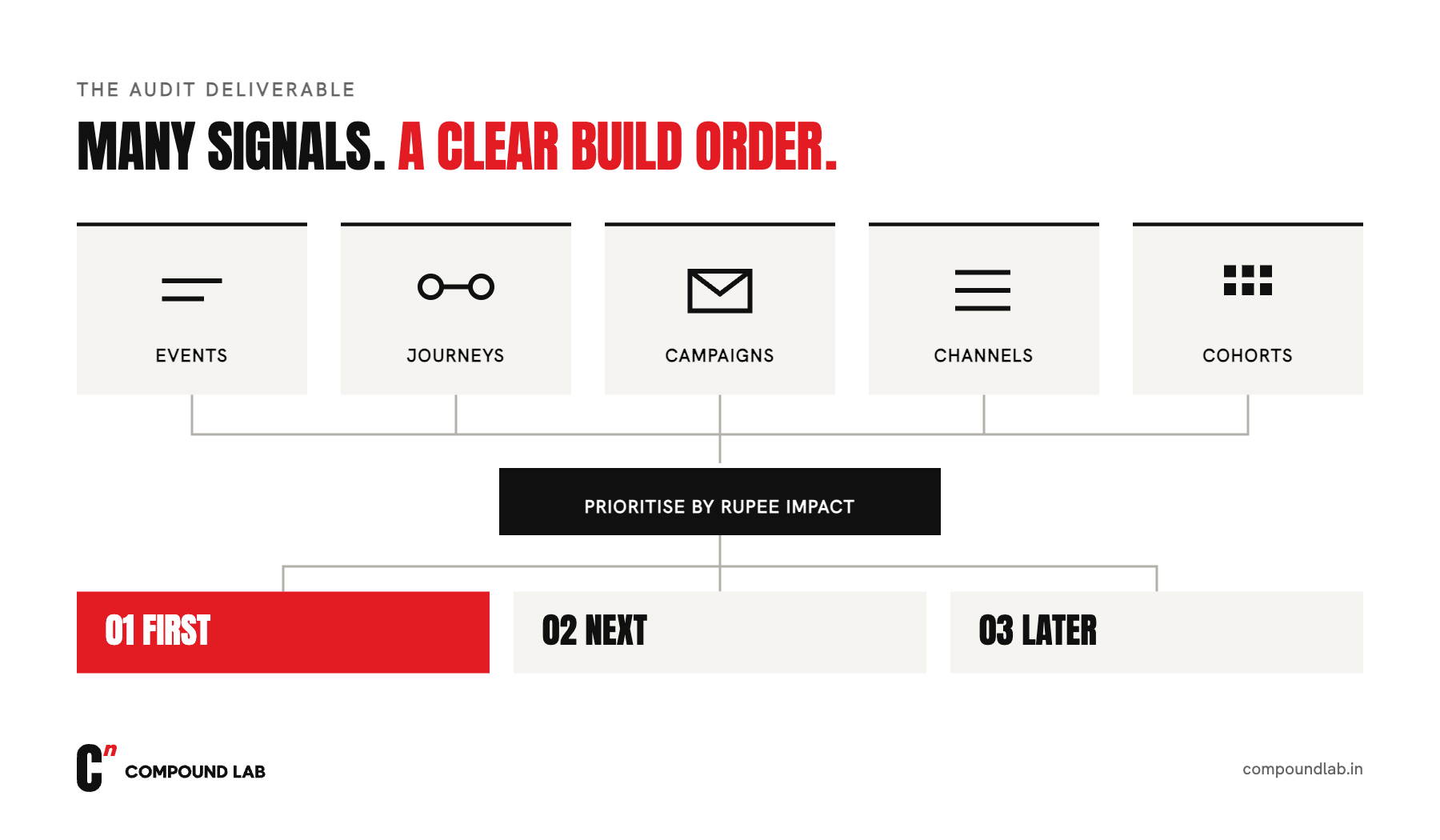
Every engagement starts with a Retention Audit. In the first month, I read:
- Your data and events: what your tool is actually capturing, and what it's missing.
- Your customer and purchase journeys, from first visit to repeat order.
- Your campaign history: delivery, click-through and conversion, with every message sorted by what it earns. The WhatsApp delivery breakdown shows why reach needs checking before copy.
- Your channels and funnel: how much of your traffic you can identify, and where each stage leaks.
- Your cohorts: if repeat revenue is falling month on month, which new customers stopped coming back, and when. For Shopify brands, the customer cohort report groups customers by their first order and shows repeat purchasing over time.
By the end of the month, you have a list of fixes ranked by rupee impact, so you know what to build first and what it's worth.
The Healthify win-back campaign breakdown shows what happens after that diagnosis: customer history becomes segmentation rules and a more relevant message.
FAQ
When should a D2C brand hire a full-time retention head? My first-pass test is whether a one-percentage-point improvement in repeat rate or conversion could justify the fully loaded annual cost of the hire. I would start looking seriously around 2 to 3 lakh customers with 30 to 40% buying again, but those are experience-based guideposts. Margins, lifecycle complexity and execution needs matter more than a fixed customer threshold.
Can my performance marketing agency handle retention? It can, if it has dedicated retention capability and owns the automated journeys as well as campaigns. Ask who builds the flows, who checks results and who changes the plan. An acquisition-led contract does not automatically cover that work.
How much does a retention agency or specialist cost in India? The starting range I have seen is about ₹1 to 1.5 lakh a month, depending on scope and execution responsibility. This is my experience-based estimate, not an industry benchmark or a Compound Lab quote.
Is a CRM platform's onboarding enough? It can get your first flows live. Templates can be customised, but someone still needs to adapt the copy and logic, check the data and own ongoing testing. Confirm what your onboarding package includes and who takes over afterwards.
Not sure which option fits your brand? Book a 30-minute call. You'll get a straight answer, even if it's "hire a full-time head."